
Last updated November 22, 2026
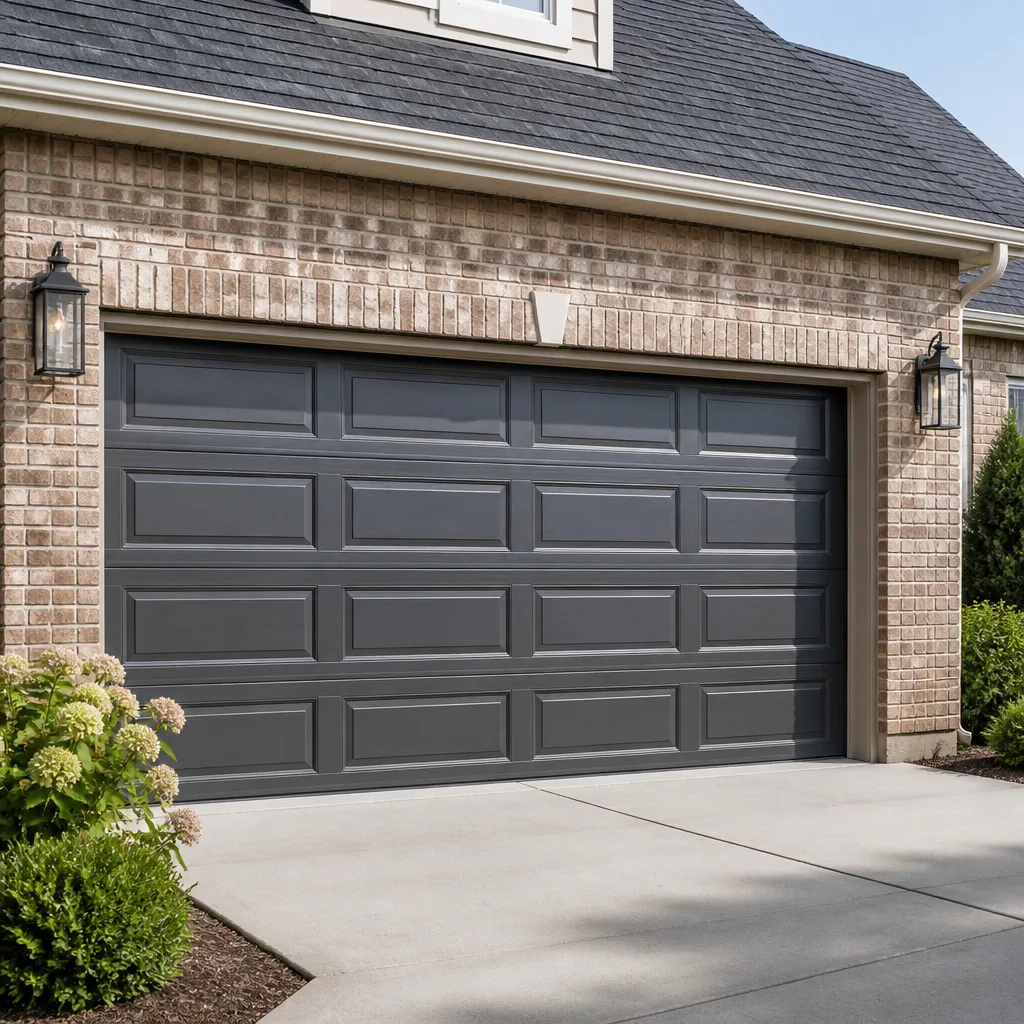 Raised-panel steel
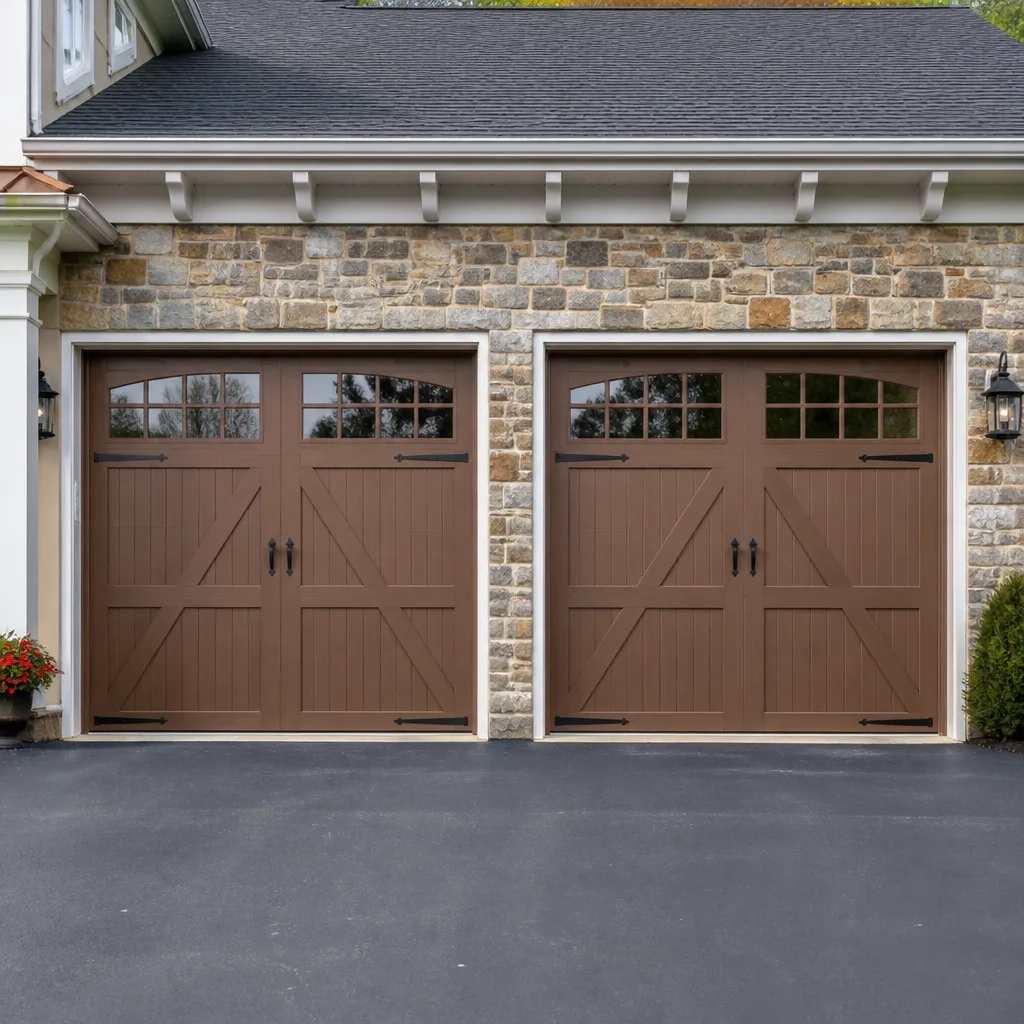 Carriage house
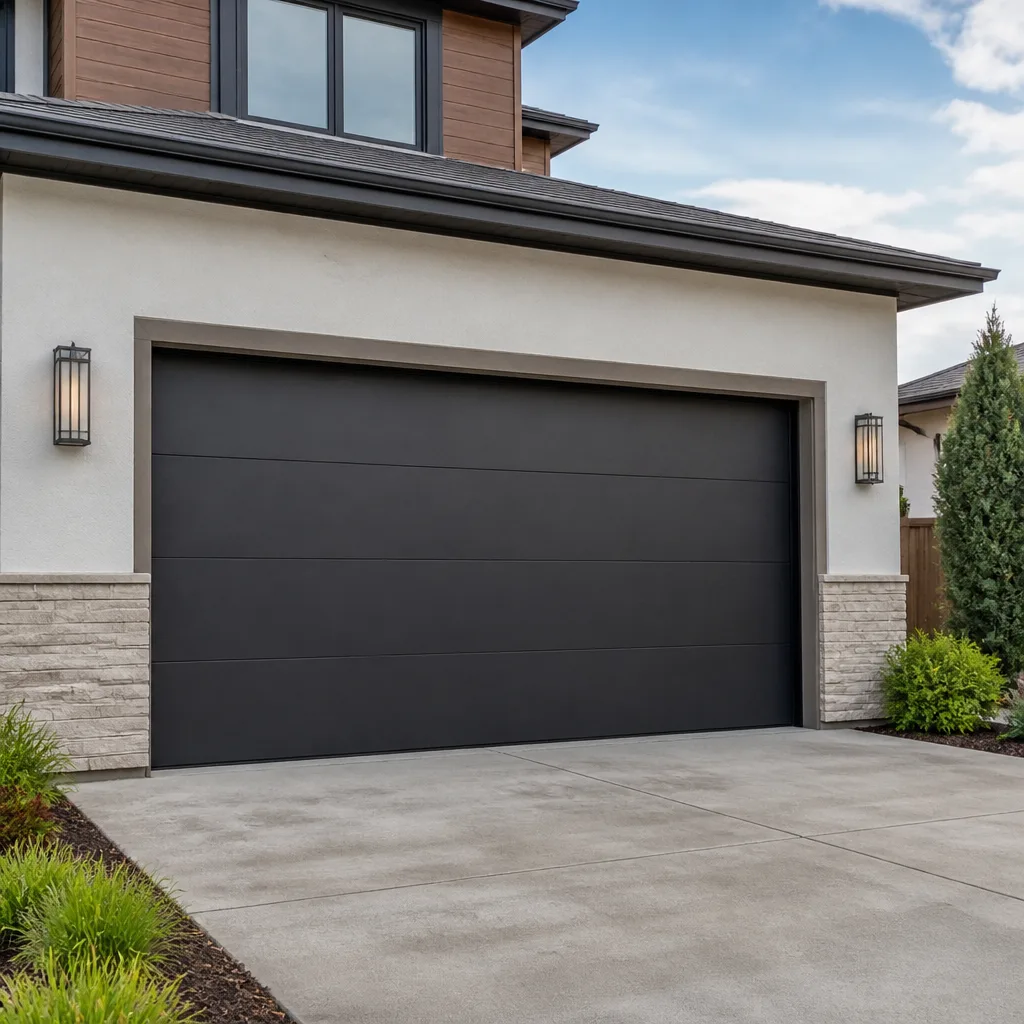 Modern flush
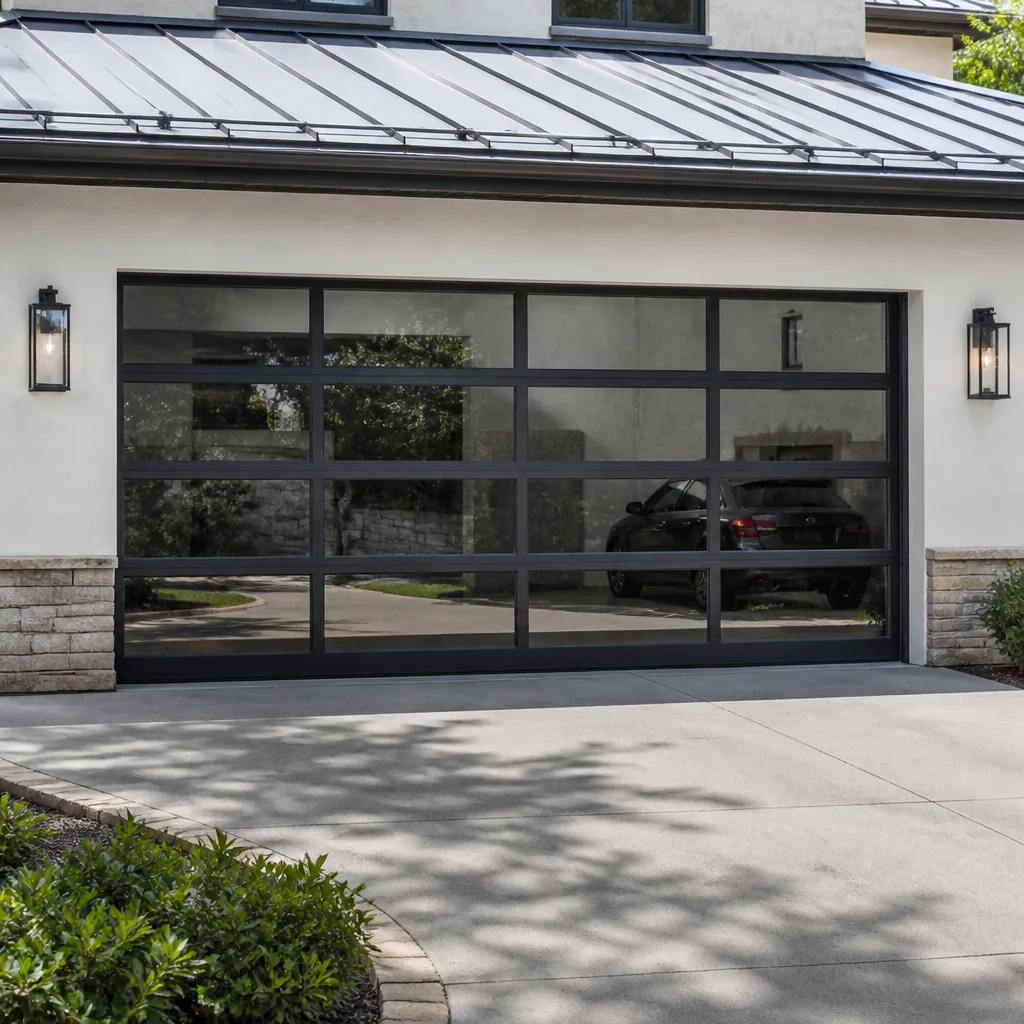 Full-view glass
 LiftMaster openers
 Chamberlain openers
Full 25-point door and opener safety check with every visit - springs, cables, rollers, tracks, and your LiftMaster or Chamberlain opener included
You get a price before we start. It does not change when the pro arrives.
Get your free estimateGarage Door Repair Troubleshooting in Sunrise: Common Problems and How to Fix Them
The same symptom, a door that stops halfway down, can come from a misaligned sensor, a failing opener gear, a bent track, or a spring that’s lost tension, and each one has a completely different fix. Misread it and you’ll replace the wrong part, or worse, put your hands somewhere they don’t belong. This guide maps symptoms to likely causes the way our technicians do it on a service call in Sunrise, walks through the safe tests you can run yourself, and draws a clear line where diagnosis has to stop and a trained professional takes over.
Quick Answer
Garage door problems in Sunrise usually trace back to six failure patterns: sensors out of alignment, opener logic or power faults, worn springs, damaged tracks, a bad manual release, or a remote that’s lost its signal. Check sensors and remotes yourself, but stop before springs, cables, or panel weights. That work is dangerous and belongs to a trained technician. Sunrise Garage Door Repair Co handles all six patterns across LiftMaster, Chamberlain, Genie, Clopay, and other major brands.
Styles & brands we work with
- Raised-panel steel
- Carriage house
- Modern flush
- Full-view glass
- LiftMaster openers
- Chamberlain openers
Table of Contents
- The Six Failure Patterns Behind Most Garage Door Problems in Sunrise
- Symptom-to-Cause Matrix: What Your Door Is Telling You
- Safe Tests You Can Run Before Calling Anyone
- The Two-Step Manual Release Test
- Why Humidity and Heat Punish Tracks in Sunrise
- Springs vs. Opener: Which One Failed?
- Troubleshooting Steps That Can Void Your Warranty
- Where DIY Diagnosis Ends and Professional Repair Begins
The Six Failure Patterns Behind Most Garage Door Problems in Sunrise
In our experience, nearly every residential garage door call falls into one of six categories. Knowing which one you’re facing tells you right away whether this is a screwdriver job or a call-the-pro job.
- Photo-eye sensor faults. The two small sensors at the bottom of the tracks lose alignment, collect grime, or get bumped. The door reverses or refuses to close.
- Opener logic or power failures. The motor runs but the door doesn’t move, the remotes stop working, or the unit trips its internal breaker. This lives inside the opener head, in the wiring, or in the logic board.
- Worn torsion or extension springs. The door feels heavy, slams down, or won’t lift past a few inches. A broken spring is one of the most dangerous failures in the system.
- Track damage. Dents, bends, or a section knocked out of plumb cause binding, grinding, and rollers that jump the rail.
- Manual release problems. The pull cord is stuck, the lockout is engaged, or the trolley won’t reconnect to the carriage.
- Remote and wall-control signal faults. Dead batteries, lost programming, or frequency interference between the remote and the opener head.
Each pattern has its own tell. A grinding door that still opens but sounds rough is usually track or roller. A door that reverses instantly and flashes a light is usually a sensor. A door that doesn’t move at all but hums is usually a spring or a stripped gear in the opener. The garage door repair team sorts these out by working backward from the symptom, not by swapping parts until something works.
What separates these six patterns is that the first, fifth, and sixth are safe to investigate yourself. The second and fourth require care but are usually fine to inspect visually. The third, a spring failure, is the one where you stop and call.
Symptom-to-Cause Matrix: What Your Door Is Telling You
Use this as a quick reference. Find the symptom your door is showing, read the most likely cause, and note whether it’s a check-it-yourself situation or a stop-here situation.
- Symptom: door reverses before touching the floor. Most likely cause: photo-eye sensor misalignment or obstruction. DIY check. Look for anything blocking the beam and confirm both sensors have a solid indicator light.
- Symptom: door closes partway then reverses. Most likely cause: sensor knocked out of alignment during parking, or a track that’s slightly bent near the bottom. DIY check possible.
- Symptom: door won’t move at all, opener hums. Most likely cause: broken spring or stripped opener gear. Stop here.
- Symptom: door is heavy to lift by hand. Most likely cause: spring tension loss. Stop here.
- Symptom: door grinds or squeals while moving. Most likely cause: dry or worn rollers, or a track that’s out of plumb. DIY inspection possible.
- Symptom: door slams at the bottom. Most likely cause: broken spring, or the opener’s travel limit is out of adjustment. Stop here if a spring is suspect.
- Symptom: remotes stop working but the wall button works. Most likely cause: remote battery, lost programming, or interference. DIY check.
- Symptom: door opens unevenly, one side higher. Most likely cause: cable off the drum, or a bent track. Stop here.
- Symptom: door only opens a few inches and stops. Most likely cause: travel limit set wrong, or a binding track. DIY check on limits, stop for track damage.
- Symptom: opener light flashes a code pattern. Most likely cause: manufacturer-specific diagnostic code. Note the pattern and call.
Write down what you see before you call. A technician who knows the door reverses at the same spot every time versus randomly can usually narrow it down before arriving, which saves everyone a step.
Safe Tests You Can Run Before Calling Anyone
There are four things you can check safely from the floor. None of them require tools and none of them put your hands near a moving door or a loaded spring.
- Sensor light test. Each photo-eye has a small indicator light. If one is blinking and the other is solid, the alignment is off. If both are dark, check that the opener has power.
- Balance test. With the door fully closed, pull the manual release cord, then lift the door by hand to about waist height. A properly balanced door should hold there with little effort. If it wants to fall, the springs are weak. If it won’t lift, the springs are broken or the door is binding.
- Remote test. Stand in the garage with the remote. If the wall button works but the remote doesn’t, the remote needs a battery or to be re-paired.
- Visual track check. Stand back and look down each vertical track. It should be plumb and straight. Any kink, dent, or outward flare at the bottom points to track damage.
That’s it. If those four steps don’t reveal the problem, or if the balance test tells you the door is heavy, the next move is a phone call. Nothing past this point is worth doing yourself.
One thing that trips up a lot of Sunrise homeowners: the balance test has to be done with the door fully closed and the opener disconnected. If the door is on the opener, the opener is holding it, and you’ll read the door as balanced when it isn’t. Release first, then test.
The Two-Step Manual Release Test
This is the single most useful test you can run. It tells you in under a minute whether the problem is the door itself (springs, tracks, cables, rollers) or the opener (motor, logic board, sensors, wiring). Every technician we know runs it in some form.
- Disconnect the opener. Pull the red manual release handle hanging from the opener carriage. You’ll hear a click. The door is now on manual operation only.
- Test the door by hand. Stand to the side, not under the door. Lift the door slowly to about waist height, then let go. A healthy door holds its position. A door that falls means the springs aren’t doing their job. A door that won’t lift at all means a spring is broken, a cable is off, or the door is physically bound in the tracks.
If the door is balanced and easy to lift, the springs and tracks are fine, and the problem is the opener or the sensors. That’s good news. It usually means a simpler fix. If the door is heavy or drops, the problem is mechanical, and that’s the point where the professional takes over.
To reconnect after testing, lift the door to about waist height, pull the release cord again, and raise the door until it clicks into the carriage. Don’t force it.
For a symptom that traces back to the opener, our garage door opener repair team can diagnose the logic board, motor, and sensors on most major brands, including LiftMaster and Chamberlain units, in a single visit.
Why Humidity and Heat Punish Tracks in Sunrise
Sunrise runs humid for most of the year, and that affects garage doors in ways that inland homeowners don’t always see. Metal tracks don’t rust in place overnight, but the combination of humidity, temperature swings, and the occasional afternoon downpour will speed up wear on several components at once.
- Tracks shift more often. Wood framing expands and contracts with moisture, and the brackets that hold the tracks can loosen a fraction of an inch over a season. That’s enough to make a door bind or a roller jump.
- Rollers dry out. Nylon and steel rollers both lose lubrication faster in humid air. A dry roller squeals and grinds against the track, which accelerates wear on the track itself.
- Springs work harder. Humidity doesn’t break a spring, but the cycle count does. A door that gets cycled several times a day in a Sunrise household accumulates fatigue quickly, and springs eventually snap.
- Wood and paint pull away. On older wood doors, humidity loosens the joints and pushes paint off the bottom panels, which is often the first sign the door needs attention.
What this means for troubleshooting: don’t assume a problem is isolated. A grinding door in Sunrise is often a dry roller plus a slightly loosened track bracket, not one single failure. A professional checking both is the right approach. A homeowner chasing one symptom at a time often misses the second issue until it becomes the next call.
We also see paint and trim pulling away from door frames more often in Sunrise than in drier inland towns. It’s a slow problem, not an emergency, but it lets humidity into the framing, which is what eventually moves the tracks. Worth a look during your visual check.
Springs vs. Opener: Which One Failed?
Springs lift the door; the opener only guides it. When a homeowner says “my opener broke,” roughly half the time it’s actually a spring. The opener hums because it’s trying to lift a door that’s now too heavy, and the motor stalls out. Getting this distinction right saves you from paying for an opener you didn’t need to replace.
Here’s the reliable way to tell them apart:
- Opener problem: The door is easy to lift by hand, but the opener won’t move it. The motor runs, the light flashes, and the remotes don’t do anything.
- Spring problem: The door is heavy to lift by hand, or won’t lift. The opener may hum and stall, or the door may slam down under its own weight when released.
- Sensor problem: The door opens fine but reverses when closing. The opener light usually flashes a code.
- Track problem: The door moves unevenly, binds in one spot, or grinds along the way, but the springs still hold it up.
Springs and cables are under extreme tension. A torsion spring that lets go while you’re adjusting it can cause serious injury. That’s why we don’t give step-by-step instructions for spring work here. If the balance test points to springs, stop and call. Our garage door spring repair service exists precisely because this is the component where DIY risk is highest and the fix requires the right tools and experience.
One more spring detail worth knowing: torsion springs are rated by cycle count, not by calendar age. A spring that’s cycled four times a day in a household with two drivers will fail years sooner than the same spring on a door that opens once a day. There’s no reliable way to inspect a spring that’s nearing its limit. It just goes.
Troubleshooting Steps That Can Void Your Warranty
Most garage door and opener warranties are specific about what the manufacturer will cover and what they won’t. The warranty typically protects against manufacturing defects, not against damage from user adjustments. If you cross certain lines, the manufacturer can decline the claim.
Steps that commonly risk a warranty:
- Adjusting torsion springs yourself. Almost every manufacturer excludes spring work done by anyone other than a qualified technician. If the spring fails after your adjustment, the claim is usually gone.
- Opening the opener head. Removing the cover on a LiftMaster, Chamberlain, or Genie unit and touching the logic board or capacitor typically voids the opener warranty.
- Cutting or rerouting opener wiring. Repairs to the low-voltage wiring run between the wall button and the opener can void coverage if the wiring fails.
- Bending tracks back into shape. Track straightening done by hand rarely holds, and if the track later collapses, the manufacturer can trace it to the homeowner’s repair.
- Replacing springs with non-spec parts. Even a spring that “looks the same” can be the wrong wire gauge or rated for a different cycle count, which voids coverage on the spring and can over-stress the opener.
The safe rule: sensor alignment, remote reprogramming, and battery replacement don’t touch the warranty. Anything involving a tool, a ladder, or the inside of the opener does. When you’re not sure, ask before you start. A quick question now saves a denied claim later.
Where DIY Diagnosis Ends and Professional Repair Begins
Here’s a clean line for Sunrise homeowners to keep in mind. If the problem can be solved with your hands above your waist and nothing but the opener’s own controls, it’s yours to check. If it requires a ladder, a wrench, or anything you’d call “adjusting,” it’s ours.
Safe to check yourself:
- Sensor alignment and indicator lights.
- Remote battery and reprogramming.
- Wall button function.
- Visual inspection of tracks from the floor.
- The manual release balance test (door closed, standing to the side).
Stop and call:
- Any suspected spring or cable failure.
- Door off the track or hanging unevenly.
- Opener humming with no movement.
- Loud grinding that comes from inside the opener head.
- Any panel that’s come loose, dented, or pulled away from the frame.
- Anything that requires you to be on a ladder over a door that can move.
The dangerous part of garage door work isn’t just the spring. It’s the whole system. A door under spring tension plus a moving opener plus a homeowner on a ladder is a combination that goes wrong fast. When in doubt, we’d rather you call than guess.
The one thing that consistently surprises homeowners in Sunrise: a door that will not close at all, because it reverses immediately, is almost always fixable in a single visit and often in under an hour. The problem looks huge from inside the garage. From the technician’s side, it’s usually a sensor or a track bracket.
Common Mistakes to Avoid
- Assuming every non-closing door is a bad sensor. It’s the most common cause, but it’s not the only one. A bent track, a bad opener limit setting, and a loose panel can all reverse the door. Test the sensor lights before replacing anything.
- Greasing the tracks. This is the most common mistake we see. Tracks should be clean and dry. Grease attracts dust and grime, which then clogs the rollers. Grease the rollers, the hinges, and the spring coils if the manufacturer allows. Not the track surface.
- Adjusting springs yourself. Even a small tightening with the wrong tool can be catastrophic. The stored energy in a torsion spring is enough to break a wrist. This is the one repair that should never be do-it-yourself.
- Replacing the opener when the spring is the culprit. Before you buy anything, run the balance test. Half the time the motor was fine and the spring was the problem.
- Assuming humidity isn’t a factor. Sunrise’s climate accelerates wear on rollers, loosens track brackets, and pushes wood doors to swell. A yearly visual check catches most of it before it becomes a call.
- Ignoring a slow, quiet grind. Small noises become big problems. A grinding roller left alone eventually damages the track itself, which is a much more expensive fix.
- Pairing the wrong remote. A LiftMaster remote won’t pair with a Chamberlain opener unless the frequency matches. Save the frustration and check the opener model before you buy a replacement.
See the difference
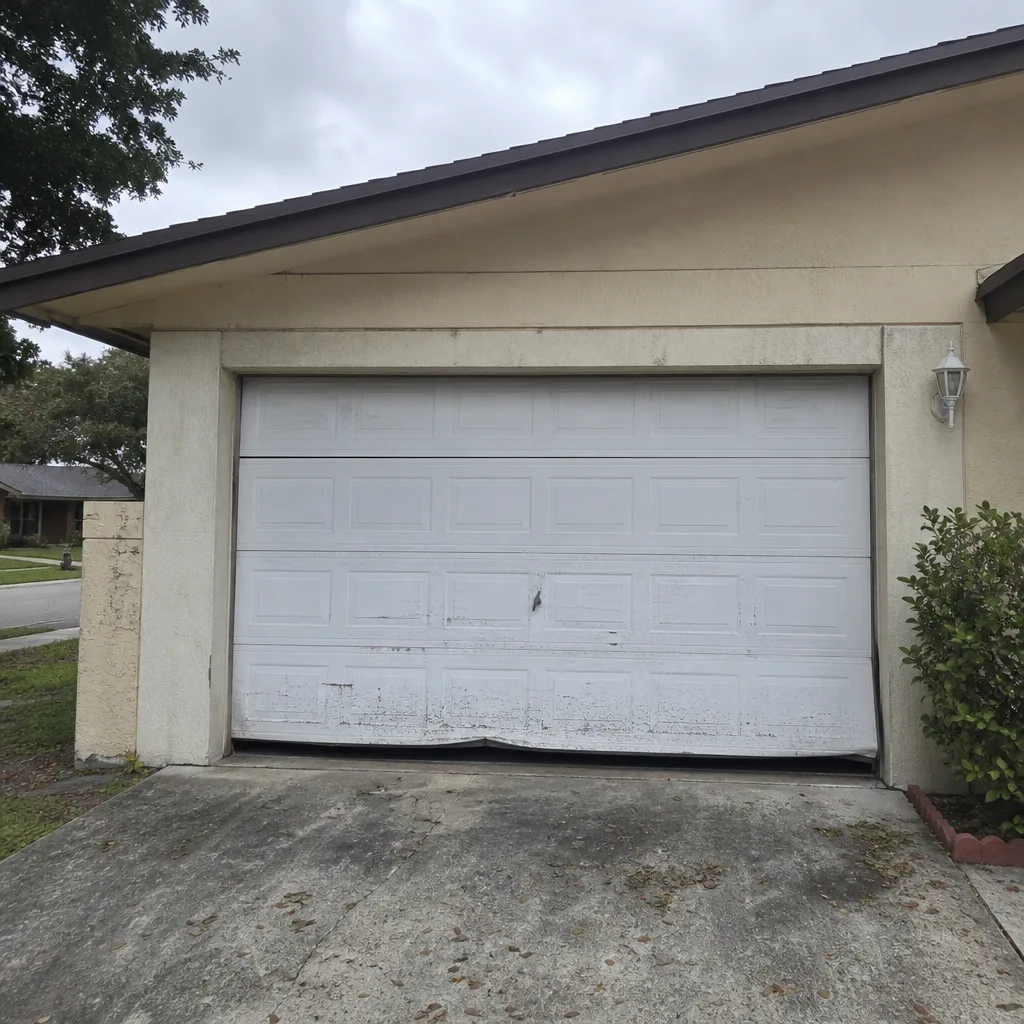 Before
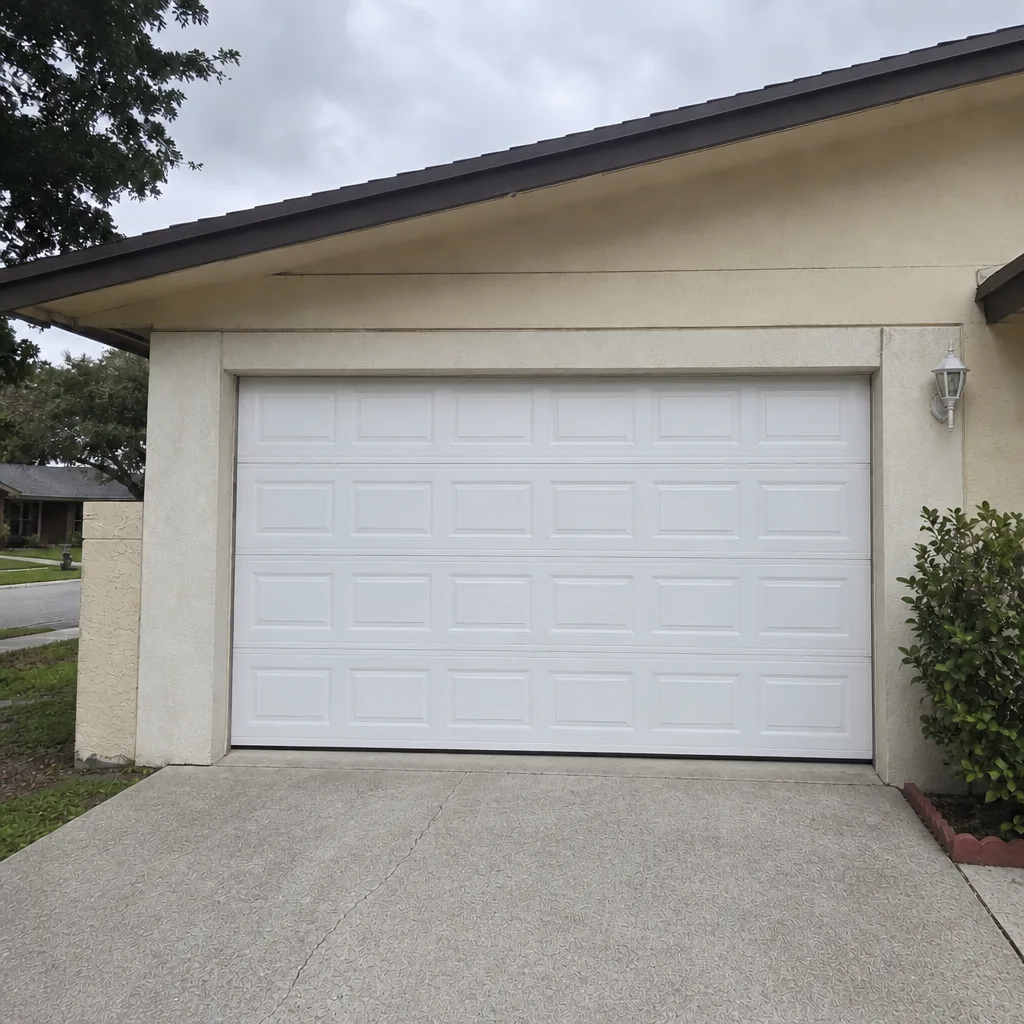 After
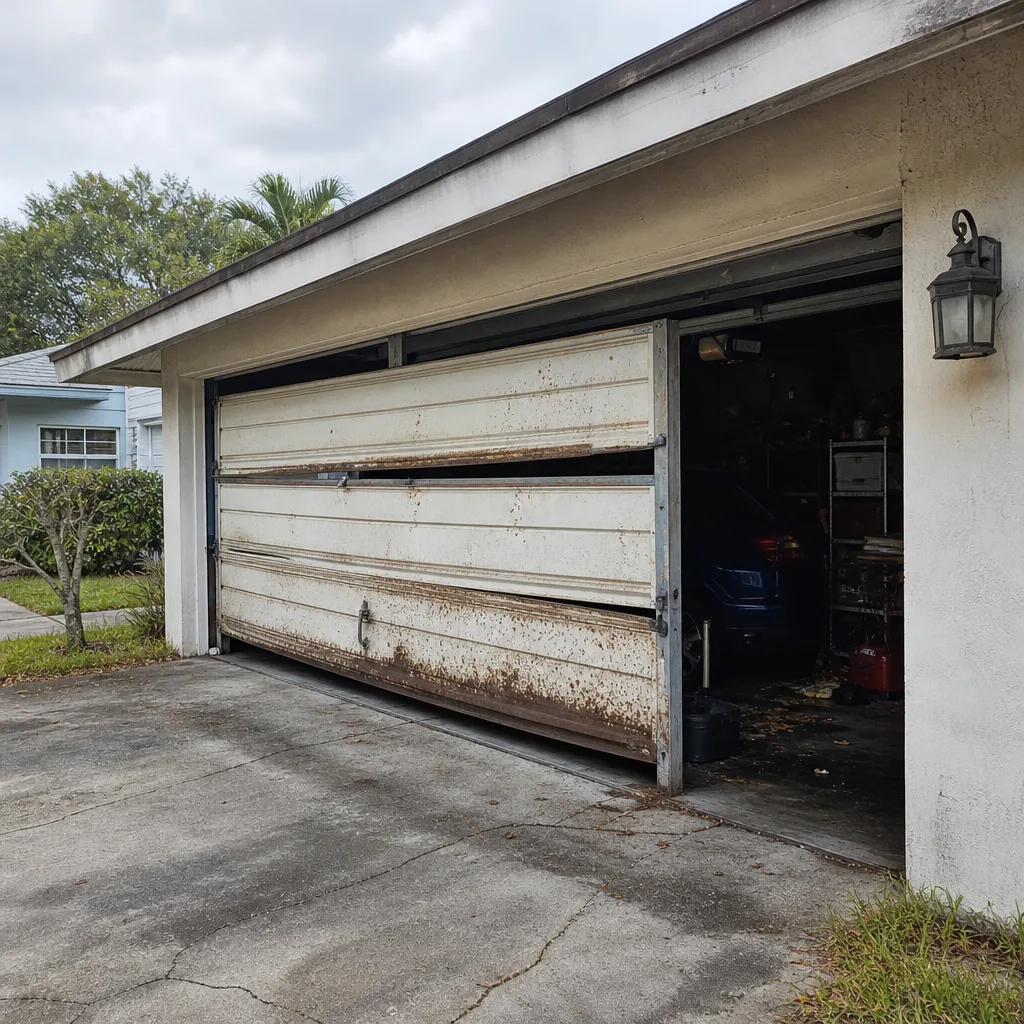 Before
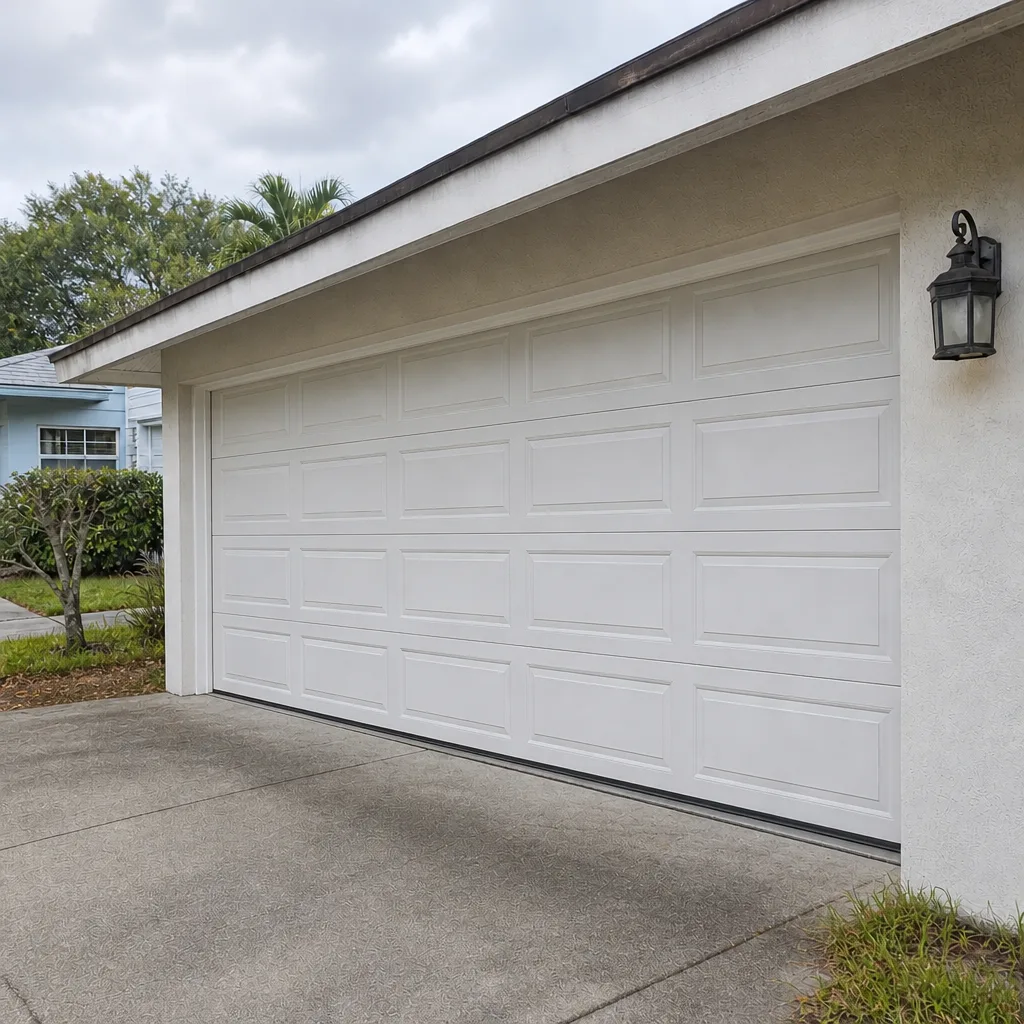 After
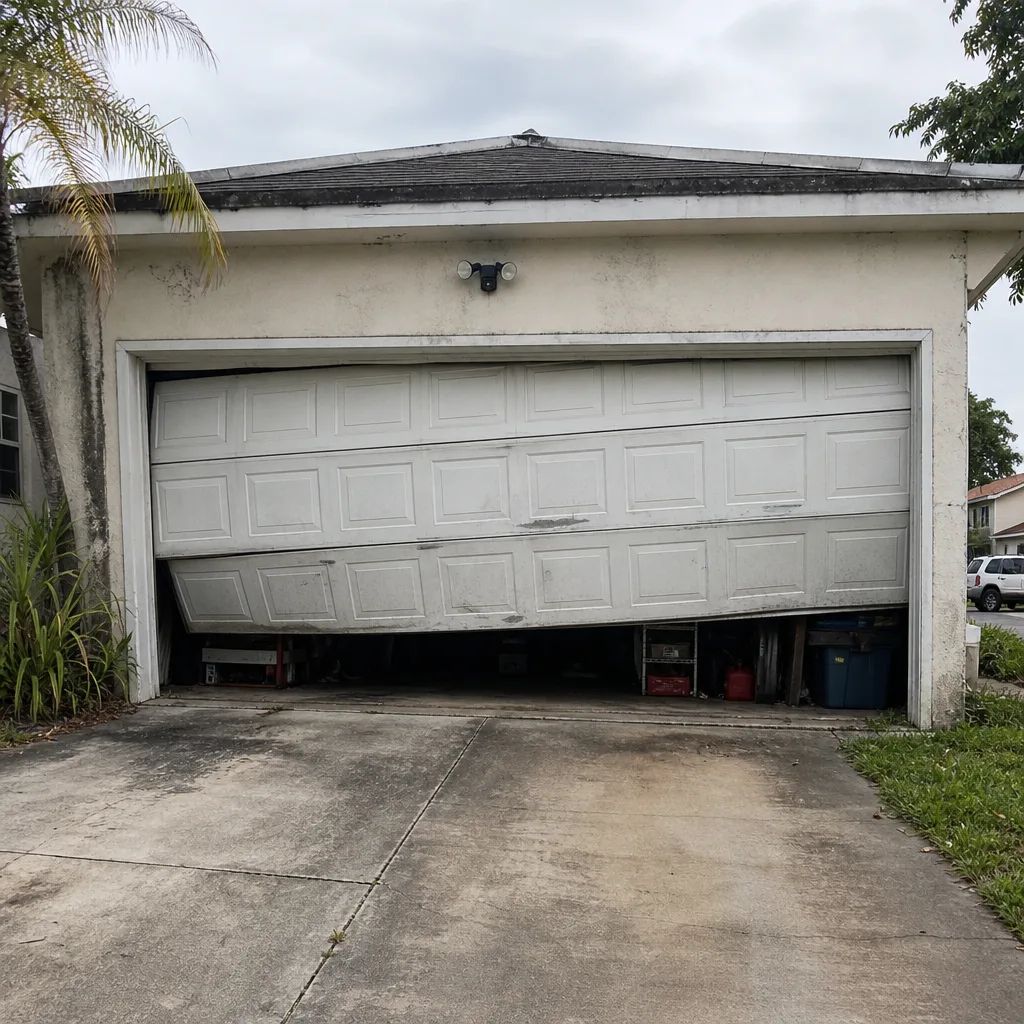 Before
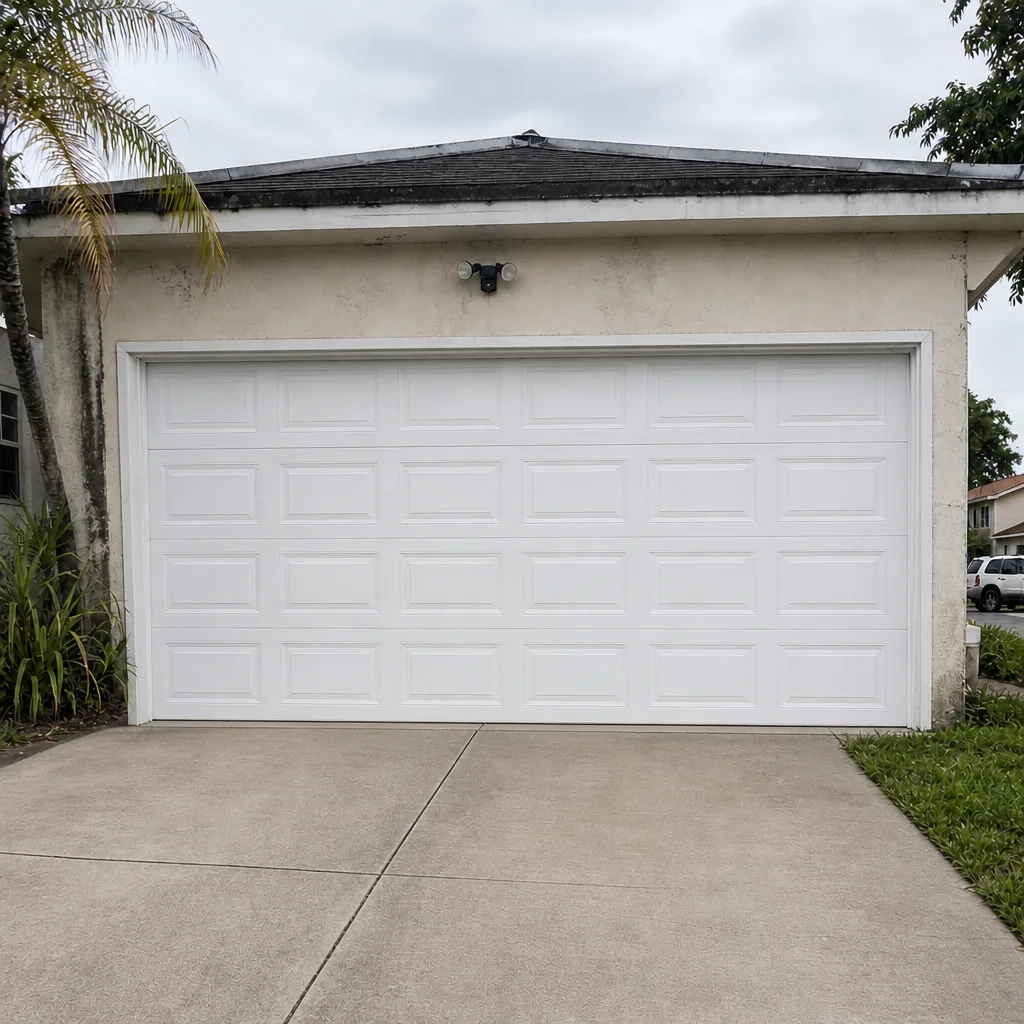 After
When to Call a Professional
Call a professional when the balance test shows the door is heavy, when the door is off the track, when the opener hums without moving, or when anything is visibly bent, cracked, or pulled loose. Call when a spring has snapped, when a cable has come off its drum, and when the fix involves a ladder over the door.
Sunrise Garage Door Repair Co offers free estimates in Sunrise for all of those cases, across LiftMaster, Chamberlain, Genie, Clopay, Amarr, Wayne Dalton, Craftsman, and Raynor equipment. Our technicians have up to 11 years of experience, and we quote the price, agree it with you, and stick to it before any work starts. Call (877) 685-2138. We answer 24/7. Fast dispatch from 7am to 7pm, Sunday through Friday.
Frequently Asked Questions
Cost depends on the specific failure, but sensor alignment, remote reprogramming, and minor adjustments are usually straightforward, while spring repair and track replacement cost more because of the parts and labor involved. We quote every job in writing before work begins, and the written estimate is the price. Call (877) 685-2138 for a free estimate on your specific door.
In most cases, yes. Emergency garage door service is a core part of what we do, so a door that won’t close or won’t open gets priority. We answer 24/7. Fast dispatch from 7am to 7pm, Sunday through Friday, and closed Saturday. Call (877) 685-2138 and we’ll book the soonest opening.
No. We quote the price, agree it with you, and stick to it before any work starts. If we discover a second issue while we’re on site, we tell you what it is and quote it separately before we touch anything. Call (877) 685-2138 for a free estimate.
Yes. The local professional we connect you with is licensed and insured as Florida requires. Our technicians have up to 11 years of experience on residential garage doors and openers. Call (877) 685-2138 with any questions before booking.
Humidity itself doesn’t usually cause reversing. That’s almost always a sensor or a track. What humidity does is loosen track brackets and dry out rollers, which can push a track slightly out of alignment over time and trip the sensor beam. Run the sensor light test first, and if both lights are solid, the fix is usually track or limit adjustment. Call (877) 685-2138 if the door still won’t close.
Repair when the door is structurally sound and only one component has failed. Replace when the door is showing damage across multiple panels, when a spring and a track and a roller are all failing at once, or when the opener is beyond reasonable repair. A free estimate lets you see the honest answer, not a sales pitch. Call (877) 685-2138 for a look.
The Bottom Line
Most garage door problems in Sunrise fall into one of six failure patterns, and the symptom-to-cause matrix is what tells you which one you’re facing. Check sensors, remotes, and tracks from the floor. Run the balance test with the door closed and the opener disconnected. If the door is heavy, off the track, or grinding from inside the opener, stop and call. Springs, cables, and panel weights are where diagnosis ends. Everything else is worth a look before you pick up the phone.
Sunrise Garage Door Repair Co handles repair, opener work, spring repair, and installation on LiftMaster, Chamberlain, Genie, Clopay, and other major brands. Whether you’re troubleshooting a stubborn door or you’ve already crossed the DIY line, we’re ready to help. Sunrise Garage Door Repair Co offers free estimates on every job, quoted and agreed before any work begins. Call (877) 685-2138. We answer 24/7. Fast dispatch from 7am to 7pm, Sunday through Friday.
Written by the team at Sunrise Garage Door Repair Co.