
Last updated November 22, 2026
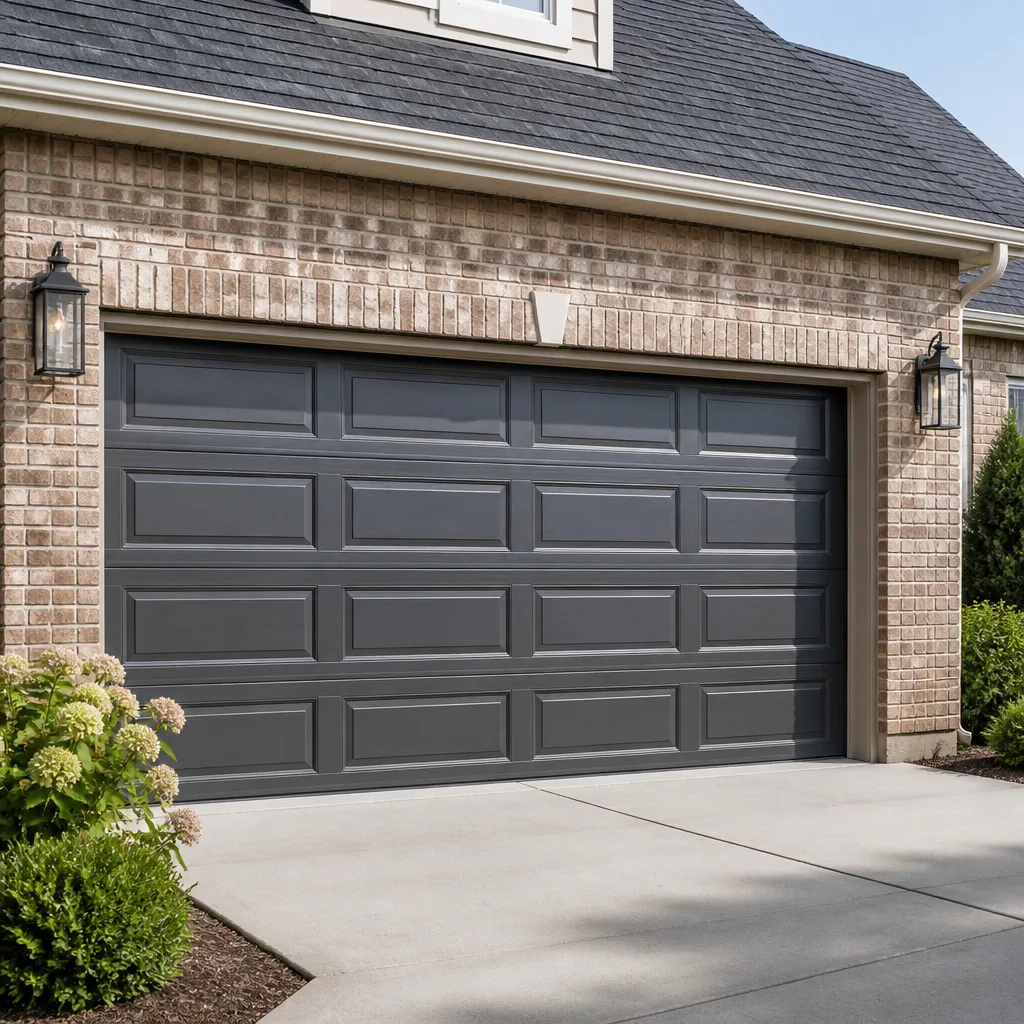 Raised-panel steel
 Carriage house
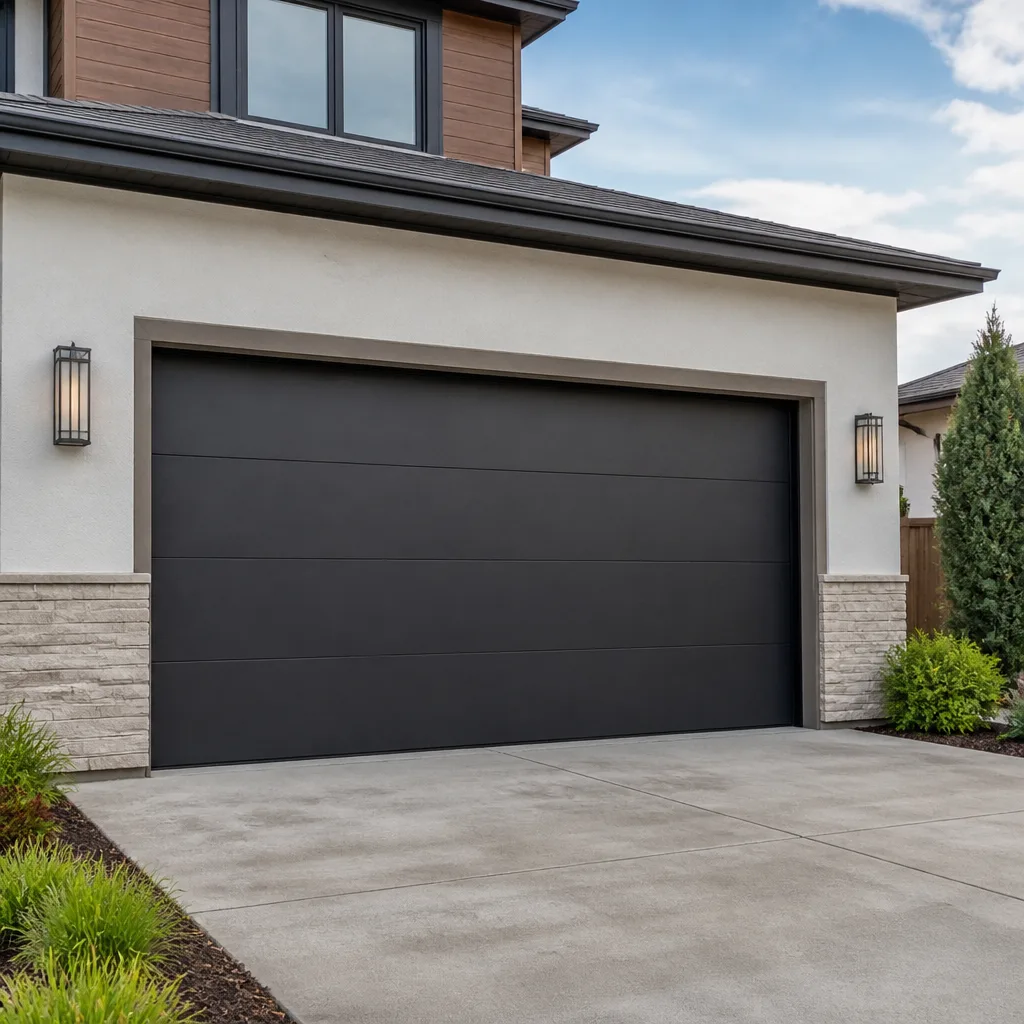 Modern flush
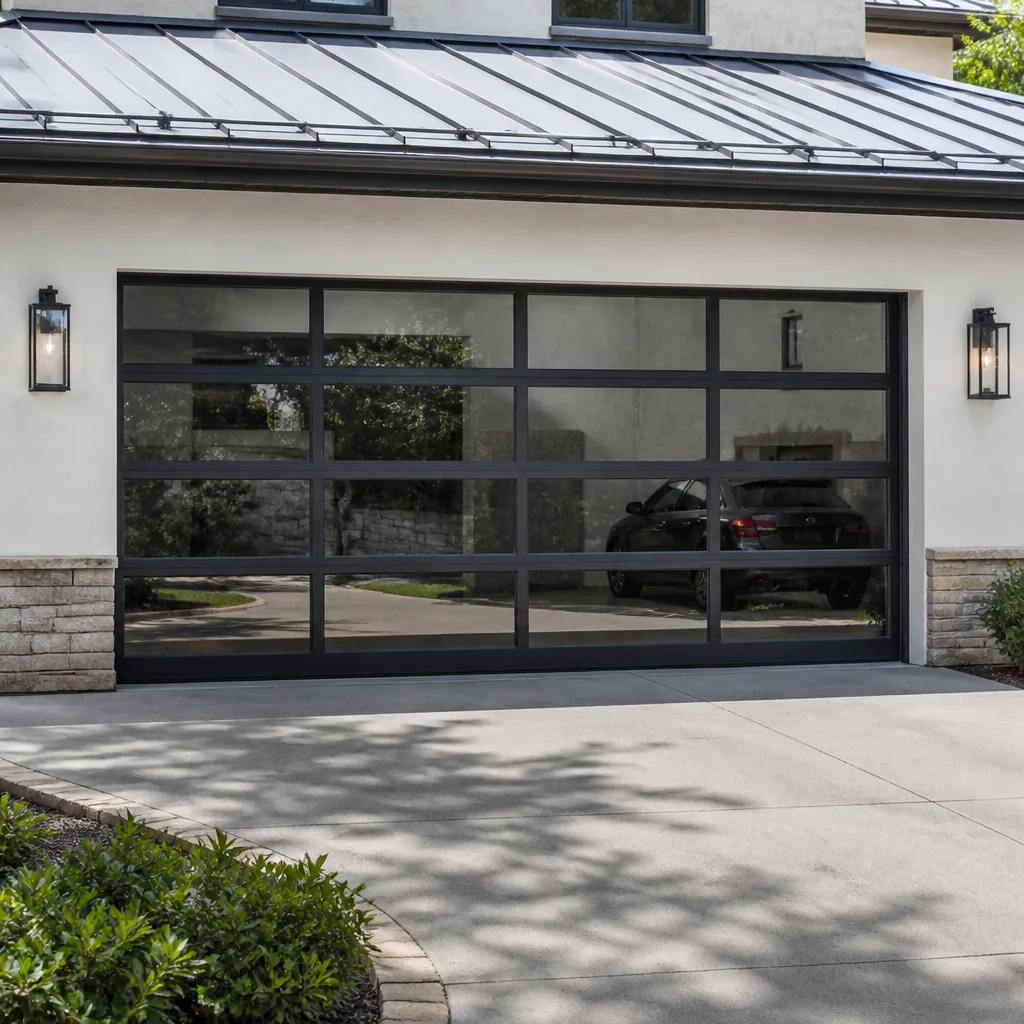 Full-view glass
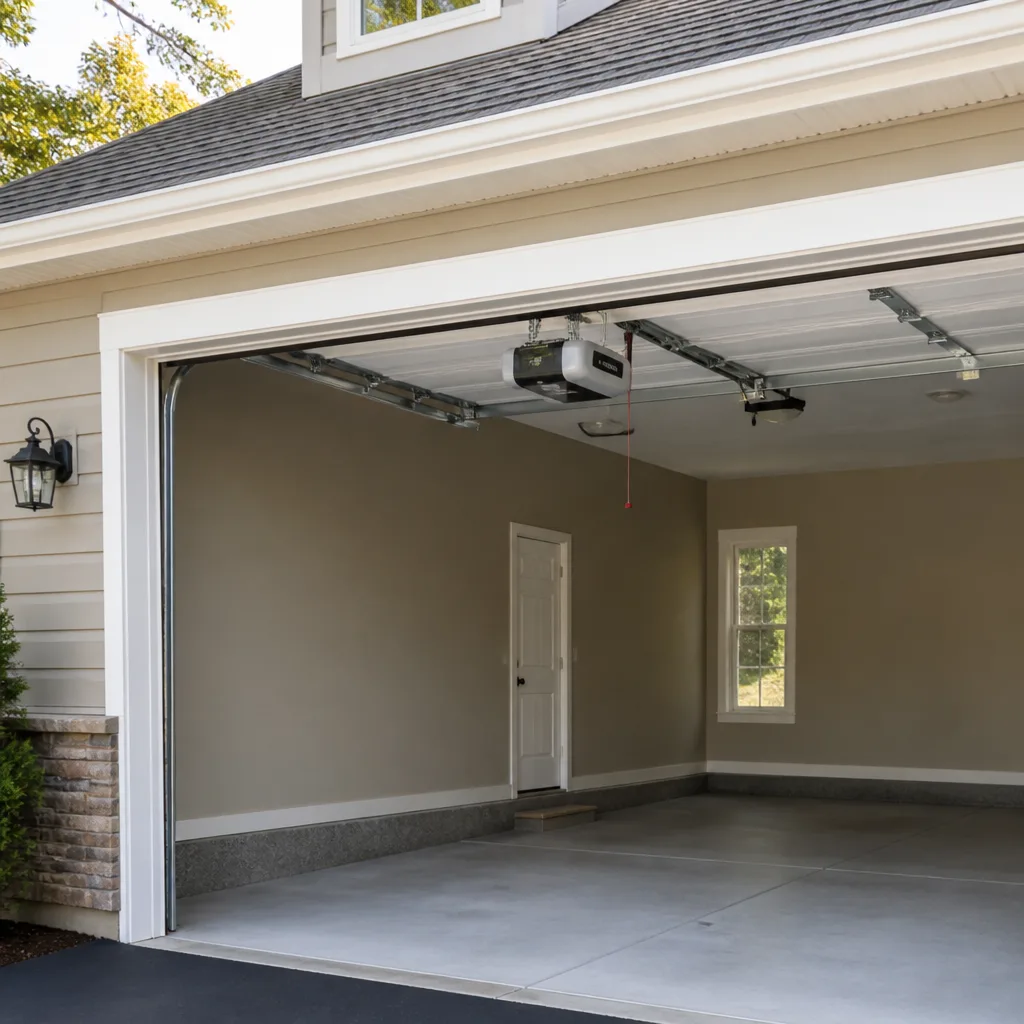 LiftMaster openers
 Chamberlain openers
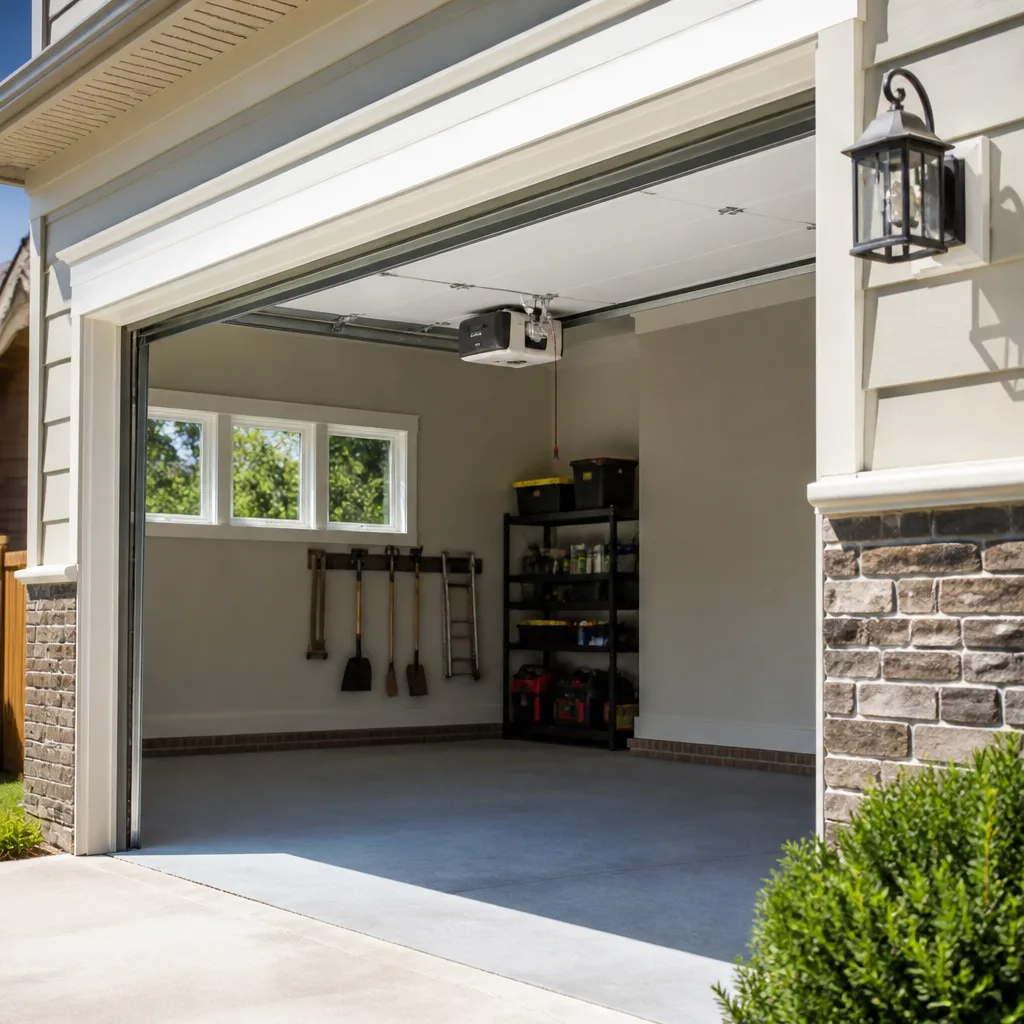
Full 25-point door and opener safety check with every visit - springs, cables, rollers, tracks, and your LiftMaster or Chamberlain opener included
You get a price before we start. It does not change when the pro arrives.
Get your free estimateGarage Door Repair Maintenance Schedule: What to Do and When
Most garage door maintenance advice you’ll find online was written for a climate that isn’t ours. Those guides tell you to winterize your door, watch for freeze damage, and clear snow from the bottom seal. In Sunrise, none of that applies. What actually wears out your door here is year-round heat, heavy summer rain, and the salt-heavy air that moves through South Florida on the breeze. That combination attacks metal, rubber, and lubricant in ways a generic checklist never accounts for. Our technicians have up to 11 years of experience working on doors across this region, and we’ve learned that a maintenance schedule built for a cooler, drier climate will leave you replacing parts sooner than you should. This guide gives you a calendar that actually fits where you live. You’ll learn what to check each month, which lubricants survive the humidity, and when it’s worth calling a professional.
Quick Answer
Garage door maintenance in Sunrise should follow a Florida-specific calendar: a monthly five-minute self-inspection, quarterly lubrication with humidity-resistant products, a pre-storm safety check in May before hurricane season, and a post-storm professional inspection in November. Springs, cables, and rollers need the most attention because heat and salt air accelerate wear on metal components. A professional tune-up once a year catches what a visual check can’t.
Styles & brands we work with
- Raised-panel steel
- Carriage house
- Modern flush
- Full-view glass
- LiftMaster openers
- Chamberlain openers
Table of Contents
- Why Florida Doors Wear Faster Than the Manual Says
- The Five-Minute Monthly Self-Inspection
- Your Month-by-Month Sunrise Maintenance Calendar
- Which Lubricants Hold Up in High Humidity
- Tracking Spring Cycle Life Honestly
- What You Can Do Yourself vs. When to Call a Pro
- Pre-Storm Prep and Post-Storm Recovery
- What Maintenance and Repair Typically Cost in Sunrise
Why Florida Doors Wear Faster Than the Manual Says
Your door’s manufacturer gives you a set of maintenance intervals based on average conditions. Average conditions don’t exist in South Florida. The heat alone speeds up the breakdown of grease and the drying out of rubber seals. Add in the humidity and the trace salts carried in the air from the coast, and you have an environment that quietly degrades metal fittings, hinges, and fasteners every day of the year. This matters most for moving parts, because that’s where friction and moisture meet.
The heat cycles are just as important. In a single day, a garage in Sunrise can go from cool morning temperatures to well over 100 degrees inside the enclosed space by midday. Metal expands and contracts with that swing, and so do the springs. Over months and years, that constant flexing adds up. Doors that get regular lubrication and inspection handle the cycling far better than doors that don’t. It isn’t about the door being low quality. It’s about a schedule that ignores the local climate.
Storm season adds another layer. From June through November, wind-driven rain and the pressure changes that come with tropical weather push against a door that’s already working through heat fatigue. A door with worn rollers, loose hinges, or a weakening spring is far more vulnerable when a storm hits. That’s why the calendar in this guide puts a serious check in May, before the worst of the season. We work on LiftMaster, Chamberlain, Genie, Clopay, Amarr, Wayne Dalton, Craftsman, and Raynor equipment, so whatever you have, we’ve seen how it handles South Florida conditions.
The Five-Minute Monthly Self-Inspection
You don’t need tools for this. You need five minutes and a flashlight. Doing this once a month is the single highest-value habit you can build, because it lets you catch small problems before they become expensive ones. Here’s the routine, in order:
- Open and close the door slowly. Listen for grinding, squealing, or any sound that wasn’t there last month. Watch it move and note any spots where it seems to hesitate or stutter.
- Check the balance. Disconnect the opener using the release handle, lift the door about halfway, and let go. A well-balanced door stays roughly where you left it. If it drops or slides, the springs are losing tension.
- Look at the springs and cables. Never touch them, but use your flashlight to check for visible gaps in the spring coils, frayed cable strands, or rust. If you see any of these, stop using the door and call a technician.
- Inspect hinges and rollers. Look for loose screws, worn rollers, or cracks in the brackets. Wobble in the hinges is common in humid climates and easy to catch early.
- Scan the weather seal and bottom edge. Check for cracking, dryness, or gaps that let water in. A failing seal doesn’t just let rain through; it lets insects and heat inside.
- Test the safety reverse. Place a sturdy object in the door’s path and close it. The door should reverse as soon as it meets resistance. This is a safety feature you should verify every month.
If something looks wrong, write it down with the date. A month-over-month log will tell you whether a noise is getting worse or was just a one-off. For repair issues that come up, our garage door repair team can look at anything on that list.
Your Month-by-Month Sunrise Maintenance Calendar
This calendar is built around Florida’s actual weather pattern, not the four seasons of a northern state. Here’s how the year breaks down:
- January – February: The driest, mildest stretch. Good time for a full professional tune-up and any parts replacement you’ve been putting off. Lubricate all moving parts and check balance at the start and end of this window.
- March – April: Temperatures climb and the afternoon showers start. Inspect the door’s weather seal and bottom edge, since this is when water intrusion first shows up. Reapply lubricant to hinges and rollers.
- May: Pre-hurricane prep month. This is your most important check of the year. Test the safety reverse, inspect the whole system, check that all bolts and brackets are tight, and confirm the door closes flush against the frame. Anything questionable needs fixing before storm season, not during it.
- June – October: Hurricane season. Keep up the monthly self-inspection. After any significant storm, do a quick visual check before using the door. Watch for rust appearing on cables, springs, or hinges after heavy rain.
- November: Post-storm professional inspection. The goal is to catch wind damage, loosened hardware, and storm-related wear before it turns into a spring failure or opener issue. Bring in a technician for this one.
- December: A quieter month for routine lubrication and a final balance check. This is also a good time to assess whether your opener is keeping pace with the door or showing signs of strain.
The truth is that every month looks similar in terms of daily weather, but the intensity shifts around storm season. What changes is how hard the door is working and what kind of stress it’s under. In Sunrise, the May and November checkpoints matter more than any other dates on the calendar. Those two bookends are the rough season on either side.
For opener-related concerns, our garage door opener repair service can diagnose issues before they become a failure.
Which Lubricants Hold Up in High Humidity
The lubricant you choose matters more in South Florida than in a dry climate. A product that works fine in Arizona might attract grit and hold moisture here. Here’s what to reach for and what to skip.
Use these:
- Silicone-based spray lubricant on hinges, rollers, and the torsion bar. It goes on thin, doesn’t attract dust, and doesn’t gum up in humidity. This is the workhorse for most moving parts.
- White lithium grease in small amounts on the opener’s screw drive or rail, if your opener calls for grease. It stays put and handles heat better than many sprays.
- Silicone or rubber-safe seal conditioner on the bottom weather seal. Rubber dries out and cracks in the heat, and a proper conditioner keeps it flexible.
Skip these:
- WD-40 or similar light penetrating oils on moving parts. They work more like solvents and don’t provide lasting lubrication. They can strip what’s already there.
- Petroleum-based grease on the rollers in a humid climate. It attracts grit, which turns into a grinding paste and wears parts faster.
- Any product labeled for all-purpose household use. Garage door components have their own needs, and a household spray is not it.
Lubrication is a quarterly job in Sunrise, not an annual one. Heat breaks down lubricant faster than cooler conditions, and humidity pulls in dust and grit that shortens its life. Simple routine care like this makes a real difference when maintained consistently. Lubricating the right parts with the right products is exactly the kind of thing that helps your Sunrise Garage Door Repair Co experience stay simple.
Tracking Spring Cycle Life Honestly
You’ll often see springs rated for a specific number of cycles, typically somewhere around 10,000 for a standard spring. That number is helpful as a rough guide, but it rarely holds up cleanly in South Florida. Here’s why: the cycle rating assumes relatively stable conditions, and it assumes the door is properly balanced. Neither is guaranteed in a hot, humid, salt-influenced environment.
Springs are also stressed by imbalance. A door that’s slightly out of balance puts more strain on the spring every time it opens. Over years, that imbalance quietly eats away at the spring’s usable life. Heat adds another layer: high temperatures can cause the metal to fatigue sooner, and rapid expansion and contraction adds micro-stress with every cycle. In practice, a spring that would hit its rated life in a cooler climate will show wear earlier here.
How do you track it honestly? Keep a simple log. Write down the date you started using the door, roughly how many times a day it opens, and the date you notice any change in how the door moves. When a spring finally fails, that log tells you roughly how many cycles you got and helps you plan for the next one. If you’re on a daily-use schedule with multiple openings a day, plan on a check about once a year. For quiet doors with only a few cycles a day, an annual inspection is still a good idea.
If you’re unsure about the state of your springs, our garage door spring repair team can inspect the system safely. Springs and cables are under extreme tension, and a failure can cause serious injury. That’s why we never recommend DIY spring work. This is not a job for guesswork or a general handyman.
What You Can Do Yourself vs. When to Call a Pro
The line between homeowner maintenance and professional service is clearer than most people think. Homeowners can handle cleaning, lubrication, visual checks, and minor adjustments. Anything involving springs, cables, or the opener’s internal components should go to a trained technician.
Safe for homeowners:
- Monthly visual inspection of the door, hardware, and safety features.
- Quarterly lubrication of hinges, rollers, and tracks.
- Cleaning tracks and wiping down the door surface, especially after storms.
- Testing the safety reverse and adjusting the opener’s force limits (most manuals walk you through this).
- Replacing the bottom weather seal (a straightforward job on most models).
- Replacing opener batteries and checking the wall control.
Leave to a professional:
- Anything involving a torsion spring or extension spring.
- Frayed or damaged cables.
- Track repair or realignment after a strike or storm damage.
- Opener motor or gear replacement.
- Roller or hinge replacement if panels need to come off.
- Any repair that starts with “the door came off the track” or “the spring broke.”
The cost comparison is worth thinking about honestly. A professional tune-up is modest and catches problems early. A DIY fix gone wrong typically costs much more than the service would have. That’s not a scare tactic; it’s the math of a complex mechanical system. We tell customers all the time that the best DIY garage door work is the kind that stops before the springs.
Pre-Storm Prep and Post-Storm Recovery
May is the month to take your door seriously. Before storm season, do a full walk-through of the list from the monthly section, but be more thorough. Check every bracket and bolt. Verify the door closes flush. Test the opener’s response and the safety reverse. Make sure the bottom seal is intact. If you have any doubt about a component, get it checked, because a door that’s fully functional during a storm is safer than one that isn’t.
During the season, keep the monthly routine running. After every significant storm in Sunrise, do a quick visual inspection before you use the door. Here’s your post-storm checklist:
- Don’t force the door open if it seems stuck. Look for visible damage first.
- Check the track for debris, bending, or misalignment.
- Check the springs and cables for rust, frays, or obvious breaks. Never touch them.
- Look for water intrusion around the bottom seal and the door’s edges.
- Test the opener and safety reverse once you’re sure the door is safe to move.
- Call a technician if anything looks wrong, even if the door seems to work.
The November inspection is your chance to have a professional look at the whole system after a season of storm stress. It’s a good opportunity to catch the wear that storms cause before it turns into a failure during the next season. We handle emergency calls and scheduled maintenance alike across Sunrise, and we work on all eight of the major brands. No matter what you have installed, we can take care of it.
What Maintenance and Repair Typically Cost in Sunrise
Maintenance is the lowest-cost item on the list, and it’s the one most homeowners skip. Here’s a general sense of what you can expect from a typical job in Sunrise, always with the caveat that the written estimate sets the final price.
| Service | Typical Cost Range | Frequency |
|---|---|---|
| Professional tune-up and lubrication | Estimate provided per job | Once a year |
| Roller or hinge replacement | Estimate provided per job | As needed |
| Weather seal replacement | Estimate provided per job | Every few years |
| Spring replacement | Estimate provided per job | When worn |
| Opener repair | Estimate provided per job | As needed |
We won’t quote you a made-up number over the phone, because the honest answer depends on your door, its year, and its condition. What we will do is give you a written estimate before any work starts. You’ll know the price before we begin, and it won’t change because we found something unexpected mid-job. That’s not a claim; that’s how we work. If you want a real estimate, call us and we’ll set up a time to look at your door.
Common Mistakes to Avoid
- Using a northern-climate maintenance guide. Following a checklist designed for snow and freeze protection will leave your South Florida door under-maintained. Florida has its own schedule, and this guide is it.
- Skipping lubrication in the rainy season. It’s tempting to think the rain handles lubrication, but water is the opposite of lubrication. Heat and humidity break down grease, so the rainy months are exactly when you should be re-lubricating.
- Choosing the wrong lubricant. Household sprays and petroleum-based grease attract grit and turn into a grinding paste. Stick to silicone-based products and save yourself a repair.
- Ignoring a slight imbalance. A door that doesn’t stay halfway up is cutting its spring’s life short by working against it every day. Get it looked at before the spring fails.
- Forcing a door after storm damage. Pushing a misaligned or stuck door after a storm can turn a fixable track problem into a broken panel or a cable snap. Call a professional instead.
- Trying to adjust springs yourself. This is the number one costly mistake in garage door ownership. Springs are under enormous tension and a wrong move can cause serious injury. Leave them to a technician.
- Waiting for something to break. Maintenance is the cheapest form of repair. A small issue caught in May costs far less than an emergency call in July.
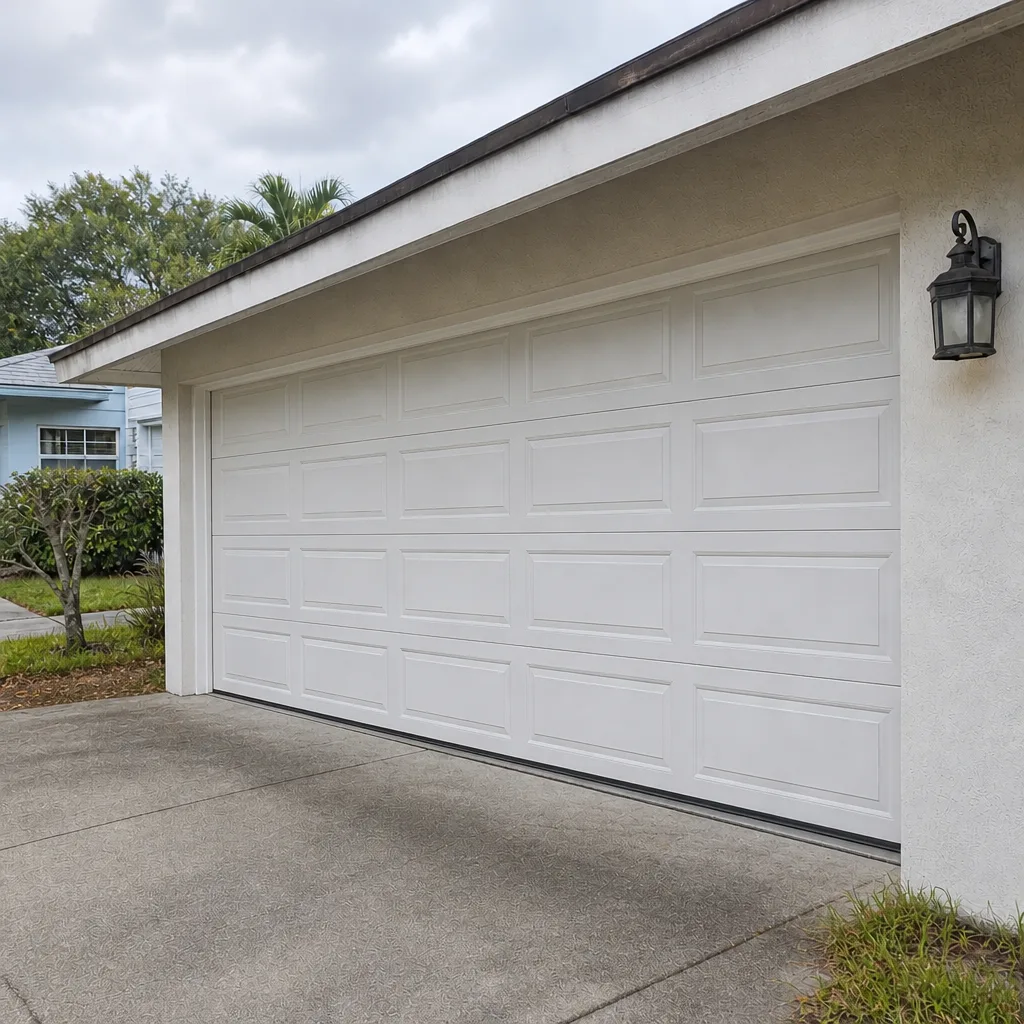
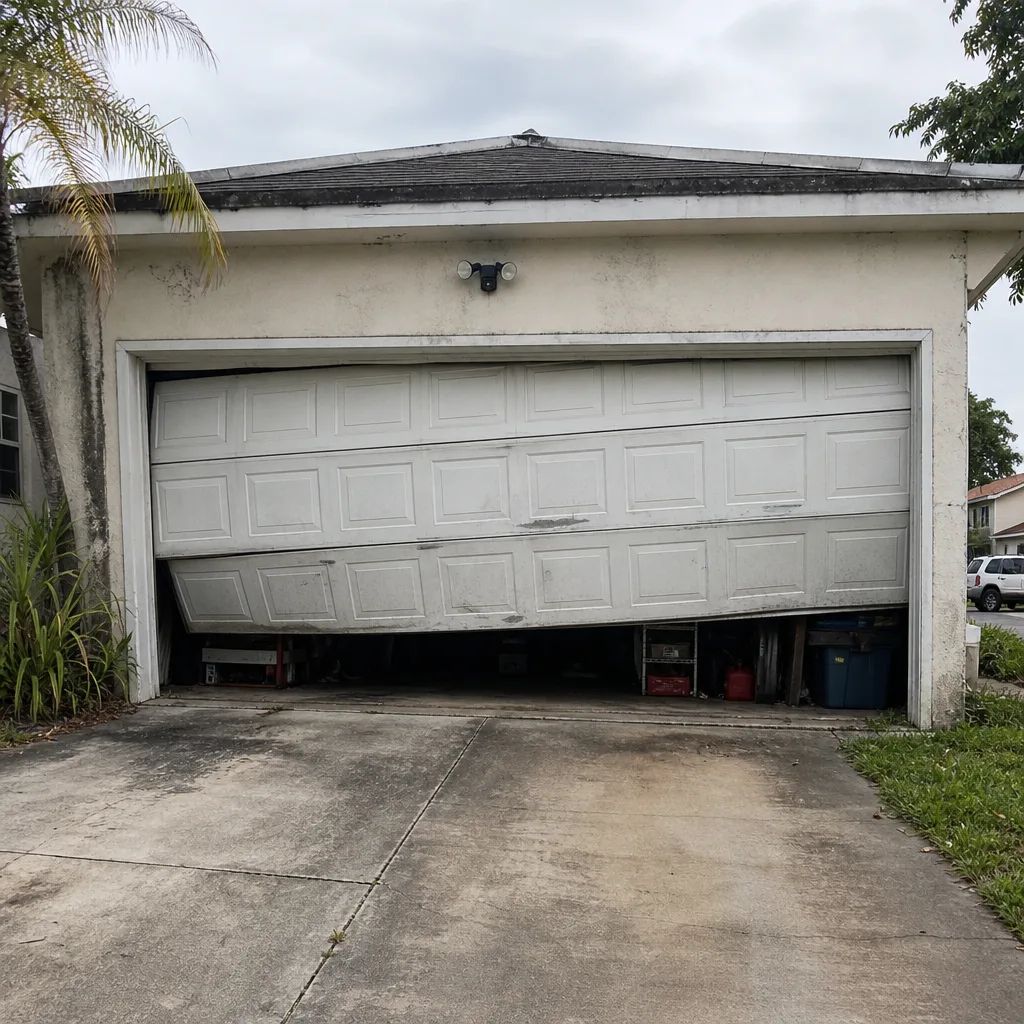
See the difference
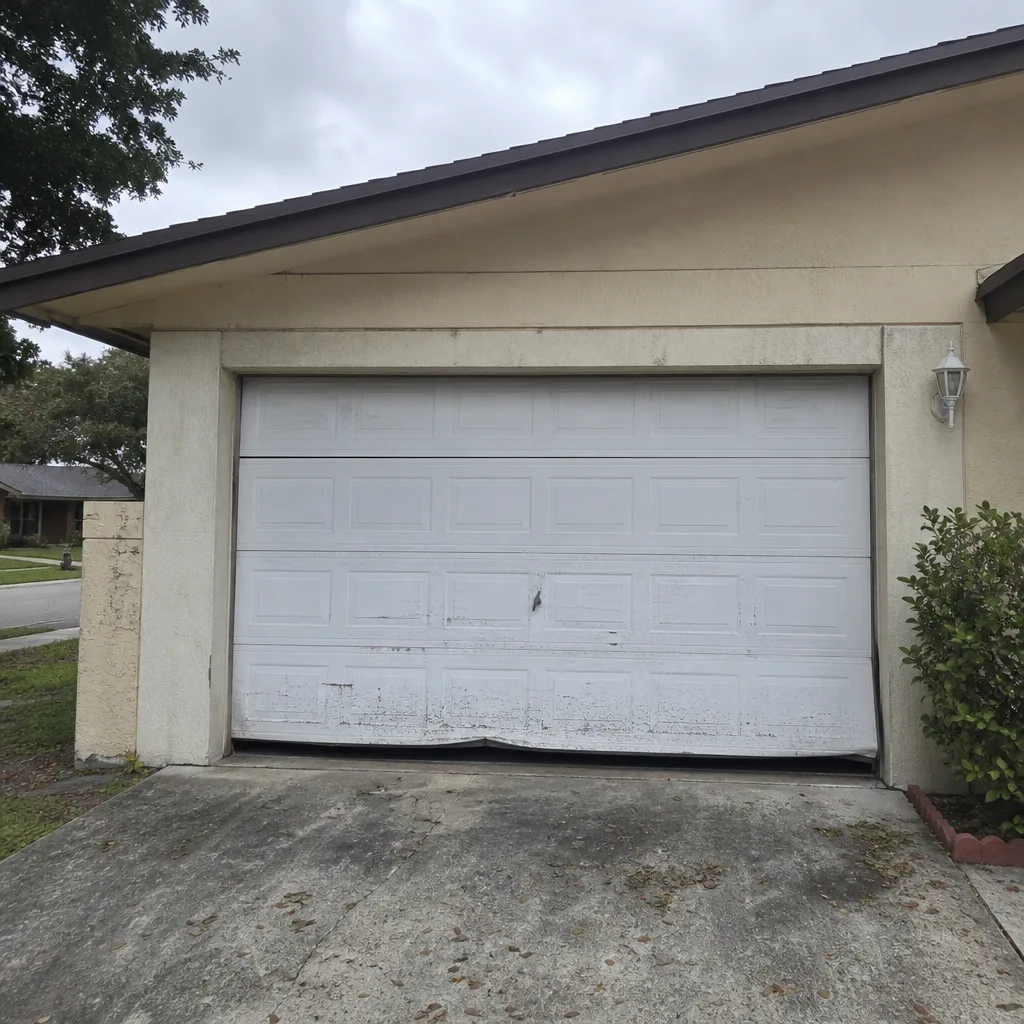 Before
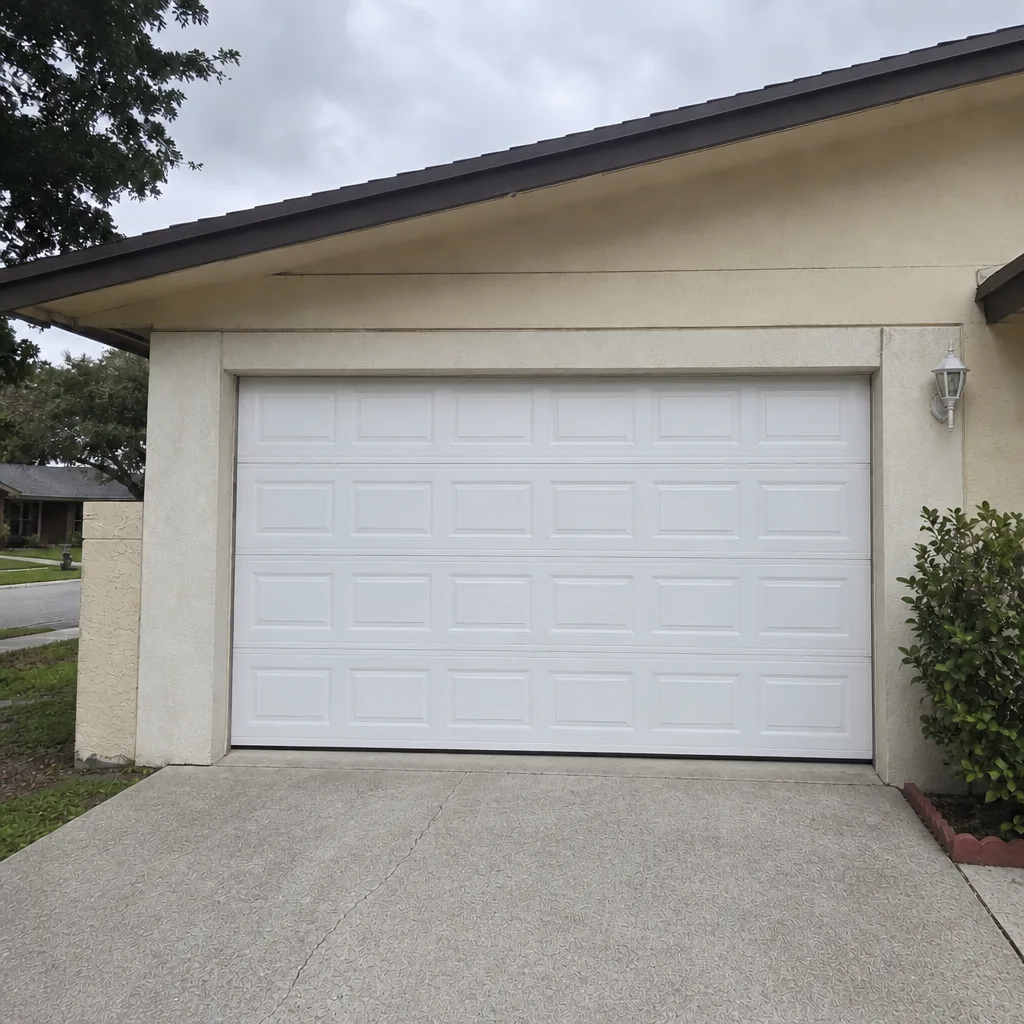 After
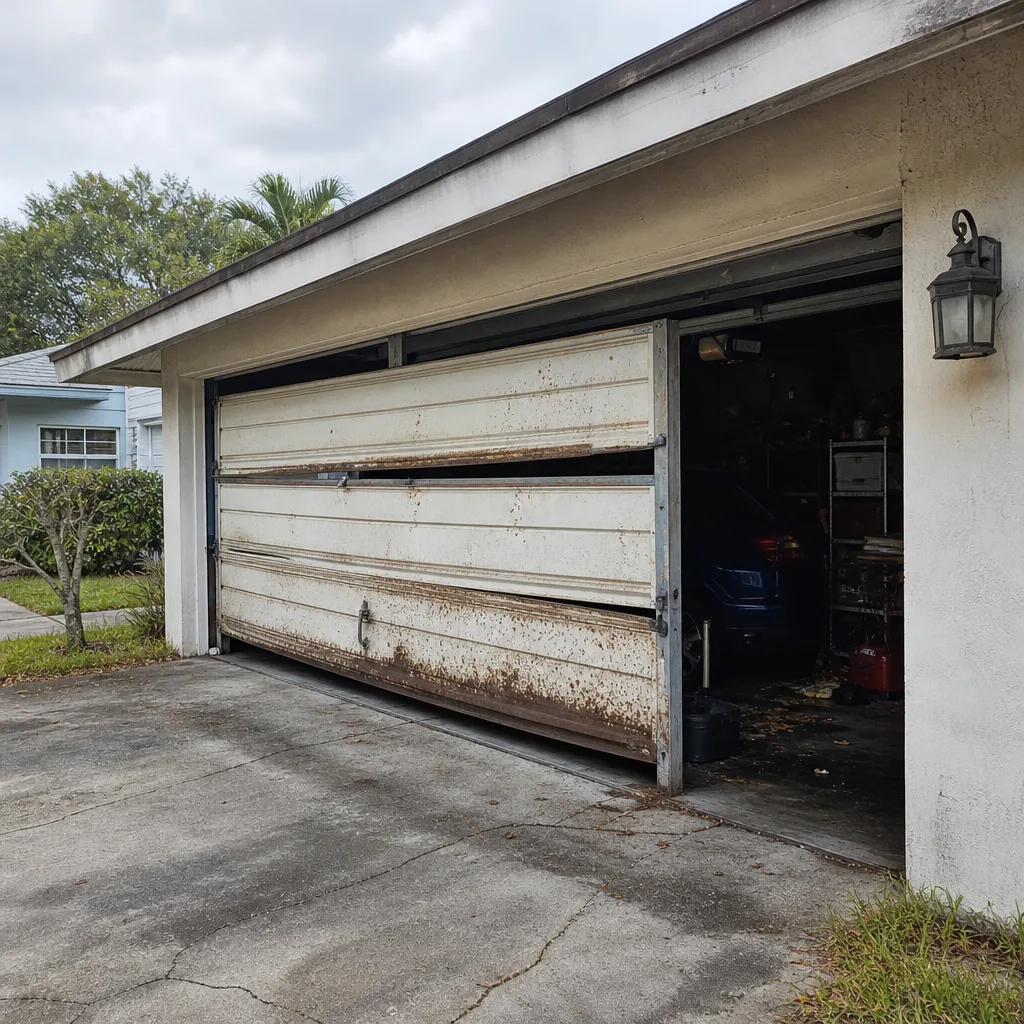 Before
 After
 Before
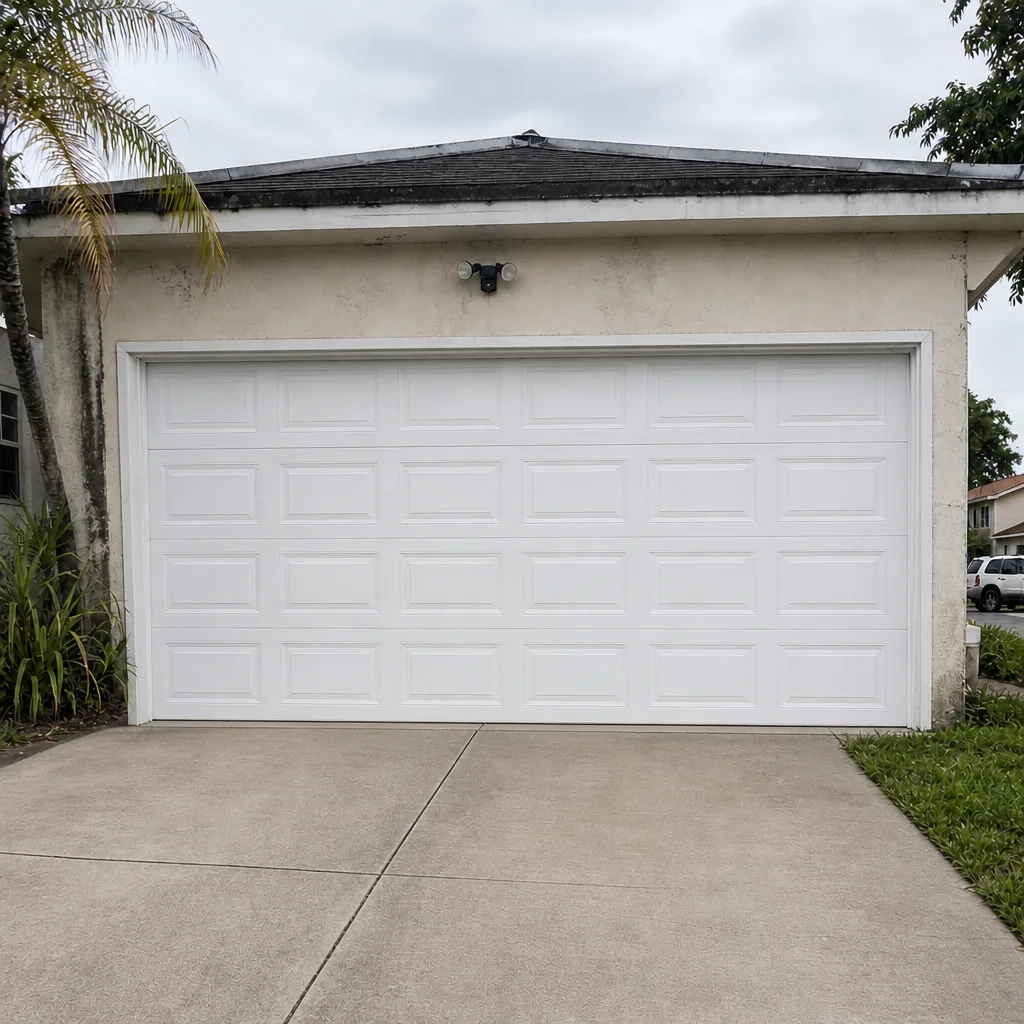 After
When to Call a Professional
Call a professional if the door is stuck, if you hear a loud bang from the garage, if a spring or cable looks broken, or if the door doesn’t close flush or reverses on its own. Those are the clear signs that the problem is beyond routine maintenance. Also call if you’ve noticed the door is getting harder to lift, if the opener is straining, or if you’ve found rust on the springs or cables.
Some situations are urgent. A door that won’t close is a security issue, and one that won’t open can leave your car trapped. If that happens, our emergency service is available to get you back up and running. We answer 24/7. Fast dispatch from 7am to 7pm, Sunday through Friday.
Sunrise Garage Door Repair Co offers free estimates in Sunrise – call (877) 685-2138. Whether it’s a routine tune-up or a broken spring, we’ll take a look and tell you what’s needed.
Frequently Asked Questions
Once a month for a five-minute visual inspection and once a year for a professional tune-up. In South Florida, the heat and humidity wear down parts faster than in other climates, so following a Florida-specific schedule matters more than following the generic guidance. A May pre-storm check and a November post-storm check are the two most important dates on the calendar. If you’d like the annual tune-up done right, call us at (877) 685-2138 for a free estimate.
Yes, lubricating hinges, rollers, and tracks is a safe homeowner task. Use a silicone-based spray lubricant and apply it quarterly, not just annually, because the humidity here breaks down lubricant faster. Avoid WD-40 and petroleum-based products, since they attract grit. If anything feels wrong while you’re working, stop and call a technician at (877) 685-2138. Estimates are free.
Heat, humidity, and the daily expansion-contraction cycle all put stress on springs, and salt carried in the air accelerates corrosion on metal. A spring rated for 10,000 cycles elsewhere may wear out sooner in Sunrise. Routine inspections and a log of how often the door cycles help you plan ahead. When it’s time for a replacement, our spring specialists can handle it safely. Call (877) 685-2138 to schedule an estimate.
Only if you’ve visually inspected it first and everything looks normal. If you see bent tracks, rust on the springs, frayed cables, or the door looks misaligned, don’t use it. Call a professional to inspect the system and make any needed repairs before you open it. Estimating is free, and we’ll tell you exactly what needs to be done. Call (877) 685-2138.
The tune-up cost depends on your door, its age, and what it needs, so we don’t quote a one-size-fits-all price. We provide a written estimate before any work starts, and the price you agree to is the price you pay. A professional tune-up is a modest investment compared to repairing or replacing components that wore out unnoticed. Call (877) 685-2138 for a free estimate.
We work on all eight of the most common residential brands: LiftMaster, Chamberlain, Genie, Clopay, Amarr, Wayne Dalton, Craftsman, and Raynor. If you’re not sure what brand you have, that’s fine – we’ll identify it when we arrive. Estimates are free, so call (877) 685-2138 to schedule a time.
The Bottom Line
Your garage door is a mechanical system doing daily work in a climate that fights it. The schedule that keeps it running smoothly here is not the one you’ll find in a generic online guide. Do the five-minute monthly inspection, lubricate quarterly with the right products, and book the May pre-storm and November post-storm checks every year. Keep a simple log of how often the door cycles and how it feels every month. That calendar will do more for the lifespan of your springs, rollers, and opener than any single repair. If you’d like a professional to look over the door, call (877) 685-2138 for a free estimate. We answer 24/7. Fast dispatch from 7am to 7pm, Sunday through Friday.
Written by the team at Sunrise Garage Door Repair Co.